Low-Maintenance Landscaping: Write Down the Jobs You Want to Avoid
“Low maintenance” can mean fewer weekly tasks, less seasonal pruning or a garden that tolerates time away. Those are different briefs. Write down which jobs you want to reduce before choosing plants or surfaces.
Be honest about what you enjoy. Someone happy to weed a small bed may dislike mowing; another household may prefer a simple lawn to maintaining numerous containers.
Make a maintenance budget in hours
List the routine tasks and how often you can realistically do them. Include autumn or fall clean-up, irrigation checks and access for occasional contractors. The aim is a manageable routine, not a promise that outdoor space can require no care.
Ask a designer to explain the proposed tasks over an ordinary year. A plant that looks compact in a nursery pot may have different long-term needs.
Match the site before the style
Discuss local climate, exposure, soil and available space with a knowledgeable local professional. EPA's WaterSense landscaping guidance emphasises choosing plants and care appropriate to the landscape. Use that principle without copying a plant list from a different region.
Ask how the planting will look at installation and at maturity. Establishment care is a separate phase that should not be mistaken for the eventual routine.
Be realistic about hard surfaces
Paving and gravel need care too. Ask about weeds, debris, cleaning, drainage and eventual repairs. Replacing every planting area with a hard surface does not automatically eliminate maintenance or suit the site.
Keep access to drains, utilities and buildings in the design discussion. Attractive edges become inconvenient when they obstruct ordinary servicing.
Approve a practical handover
Request a labelled plant schedule and simple seasonal instructions. If maintenance will be contracted out, obtain a separate scope so its cost remains visible.
For US gardens, local restrictions and plant suitability need regional advice. A successful low-maintenance design reduces the work you actually find difficult, while keeping the remaining tasks clear enough to plan.
Further reading
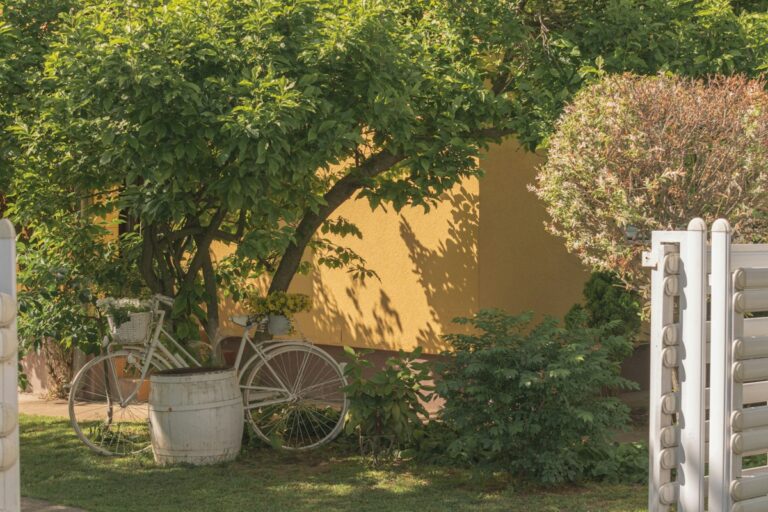
Photo: Taneti / Unsplash. Stock image for context; not a photograph of a project reviewed in this article.